How Do You Get Started With Quail Farming?
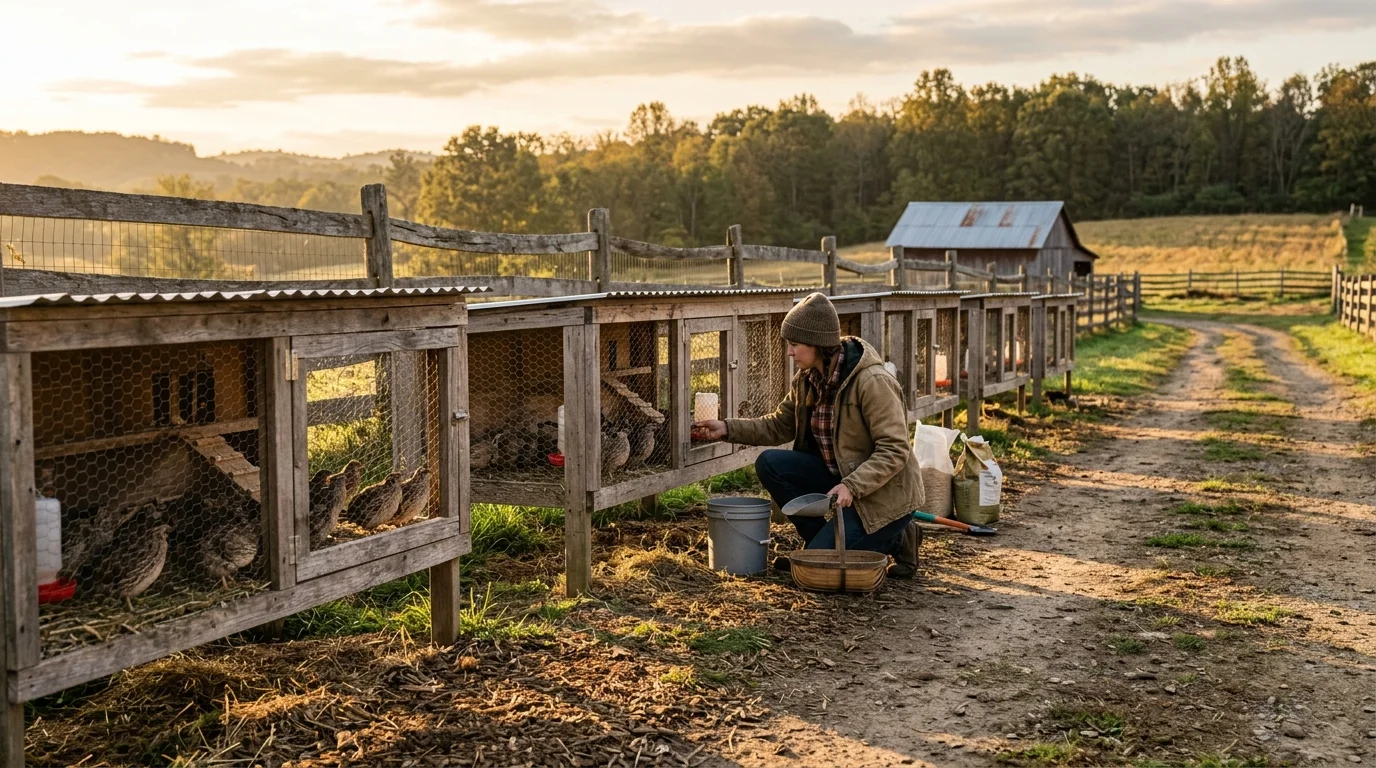
Getting started with quail farming means picking a beginner-friendly breed, building a predator-proof enclosure, and setting up a feeding and watering routine before your first bird ever arrives. Quail have become one of the fastest-growing entry points into backyard poultry because they compress the whole learning curve — breed selection, incubation, brooding, adult housing, and egg production — into a matter of weeks rather than months. Most keepers who ask why raise quail land on the same answer: they want the self-sufficiency of keeping chickens without the space, noise, or municipal zoning headaches that often come with them.
That combination of homesteading appeal and practicality is exactly why so many people search how do you raise quail before they buy a single bird. The full journey runs breed selection → incubation → brooding → adult housing → feeding → meat or egg production, and while that list looks involved on paper, the actual day-to-day quail care is genuinely simple once the setup is in place. A dual-purpose bird like Coturnix will start laying within two months of hatching, which means a new keeper gets a fast, tangible payoff instead of a long wait to see whether the effort paid off.
Many people specifically choose quail because their city’s chicken restrictions or homeowner bylaws don’t apply to them the same way — a quiet, caged starter bird flies under the radar where a rooster crowing at dawn would not. That’s not universal, and it’s the first thing to verify locally (more on that in the regulations section below), but it explains why suburban backyard and urban homesteading setups keep showing up in quail-keeping communities even in places where raising quail for beginners would otherwise seem impractical.
Is Quail Farming Easy for Beginners?
Yes — quail are widely considered one of the easiest livestock species for a first-time keeper because they mature fast, tolerate close quarters, and need no specialized skills beyond consistent feeding and cleaning. Are quail easy to raise compared to chickens or ducks? In practice, yes: there’s no vaccination schedule to manage, no elaborate coop carpentry required, and the entry-level poultry keeping learning curve is shallow enough that most keepers are confident within their first month. The main skill to build is observation — noticing a quiet or hunched bird early — rather than any hands-on technical expertise.
What keeps quail beginner-friendly long-term is the minimal daily care load: fill the feeder, check the water, collect eggs, and do a quick visual health scan. A small footprint requirement — often just a few square feet total for a starter flock — means quail fit into spaces where chickens simply couldn’t, which is a big part of why so many first-time keepers choose them over any other backyard bird.
Where Should You Source Your Birds?
You can start a flock from hatching eggs, day-old chicks, or a local breeder, and each route trades cost against convenience. Hatching eggs are the most cost-effective option and give you the full incubation-and-brooding experience, day-old chicks skip incubation entirely for a simpler first season, and buying from local breeders gets you locally adapted stock along with hands-on advice. Whichever route you choose, buy only from a reputable breeder, and always quarantine any newly acquired bird before introducing it to an existing flock — this single habit prevents most disease problems before they start.
What Does the Full Quail Growth Timeline Look Like?
A Coturnix quail’s life cycle compresses into a strikingly short window: roughly 17-18 days to hatch, 3-4 weeks in the brooder, 6-8 weeks to first egg, 6-9 weeks to meat-processing weight, and a productive working lifespan of about 2-3 years. Compared with chickens, where each of those milestones stretches noticeably longer, quail reward a keeper with visible progress within the first two months rather than the first two seasons.
How Long Does It Take to Raise Quail?
From hatch to first egg takes about 6-8 weeks, and from hatch to meat-processing weight takes about 6-9 weeks — making Coturnix one of the fastest-maturing poultry species available to backyard keepers. That egg-to-lay timeline is roughly a third of what a laying hen needs, which is a major reason quail appeal to keepers who want a quicker return on their setup effort.
How Much Does Quail Farming Cost, and Is It Profitable?
Farm raised quail operations, even small backyard ones, tend to have a low cost floor because the birds need so little space and mature so quickly. Profitability scales with intent: a hobbyist keeping six birds for table eggs will never turn a real profit, but a keeper running fifty or more hens with a plan to sell eggs and meat locally can realistically offset — and sometimes exceed — their ongoing feed costs.
The economics favor quail specifically because commercial quail farming at small scale doesn’t require the capital outlay a comparable chicken operation would. Housing footprint per bird is a fraction of what chickens need, feed conversion is efficient given how quickly quail reach production weight, and the low overhead livestock profile means a backyard income potential exists even for keepers who never intend to scale beyond a single coop.
How Profitable Is Quail Farming?
Profitability depends heavily on scale — a handful of birds kept for personal use won’t turn a profit, but a flock of several dozen sold through eggs and meat locally can become a meaningful side income. The main profit-margin factors are feed cost, local demand for egg sales revenue and meat sales revenue, and how much of the labor (cleaning, processing, marketing) the keeper does themselves versus hiring out. A hobby-scale setup should be evaluated on lifestyle value rather than dollars, while a commercial-leaning operation needs an honest look at local market demand before scaling up.
How Much Does It Cost to Start a Quail Farm?
Startup costs are modest compared to most livestock, typically covering four categories: housing, an incubator and brooder setup (if hatching your own), initial feed, and the birds or eggs themselves. Startup expense categories worth budgeting for include the enclosure build or purchase, the incubator/brooder setup cost if you’re hatching rather than buying chicks, ongoing feed cost considerations, and the initial flock acquisition cost — of these, housing and equipment are one-time costs while feed is the only truly recurring expense.
Is Raising Quail Worth It?
For most keepers, yes — the cost-to-yield ratio is favorable given how little space and time quail demand relative to their egg and meat output. Beyond the financial angle, there’s a self-sufficiency value that’s hard to quantify: a small flock can supply a household with fresh eggs and occasional meat within two months of setup, which is a fast payoff compared to most other homesteading projects. Anyone specifically raising quail for profit rather than personal use should treat the first season as a pilot to gauge real local demand before expanding.
Are Quails Cheaper to Raise Than Chickens?
Yes, on a per-bird basis quail are generally cheaper to raise than chickens because they eat less, need far less housing footprint, and reach production age in a fraction of the time. The feed cost comparison favors quail directly — a quail eats a small fraction of what a chicken does daily — and the space cost comparison is even more lopsided, since a coop built for six chickens could house dozens of quail. That maturity-speed cost advantage also matters: less time spent feeding non-productive young birds means lower total cost per dozen eggs produced.
Quail vs. Chickens: Which Is Better to Raise?
Neither breed is universally “better” — quail win on space, noise, and speed to production, while chickens win on total egg size and how well-documented their care is. On the egg output comparison, chickens lay fewer but much larger eggs annually, while quail lay more, smaller eggs on a faster cycle. The space requirement comparison and noise/zoning comparison both favor quail heavily, which is exactly why are quails better to raise than chickens comes up so often from people constrained by city ordinances or small yards — for those specific situations, quail is usually the practical winner.
How Much Does a Full-Grown Quail Cost?
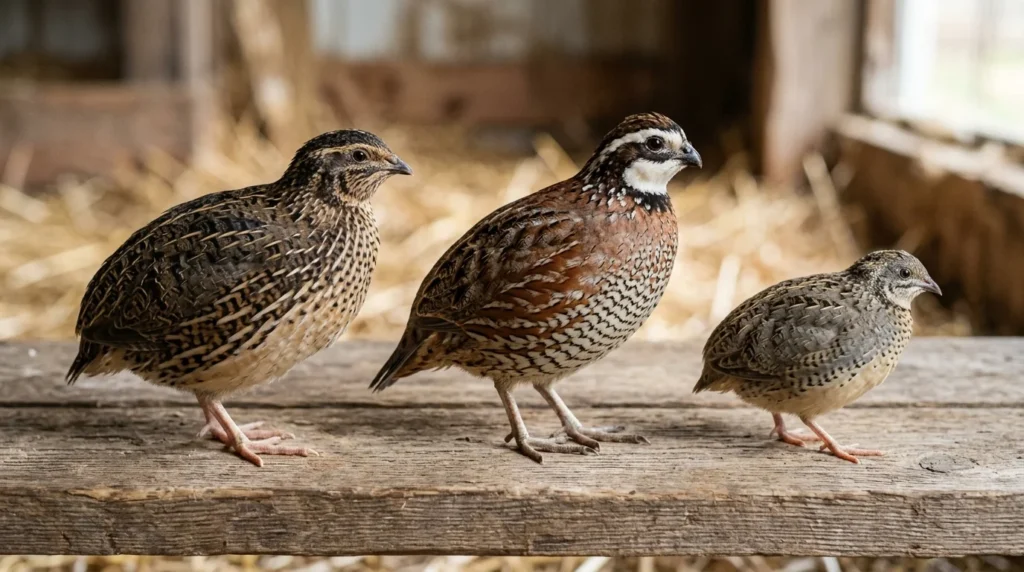
An adult, full-grown quail typically costs modestly more than a chick or hatching egg, with the exact price varying by breeder, strain, and region. Breeder pricing factors include whether the bird is proven for laying or breeding, and strain-based cost variation means a specialty Celadon or Jumbo-line bird will usually carry a premium over a standard-strain Coturnix.
How Do You Manage Males and Breeding Ratios?
Male quail management is one of the more overlooked parts of flock planning, and getting it wrong is a fast route to a stressed, aggressive flock. Males reach sexual maturity quickly and can become genuinely aggressive toward hens, so a deliberate ratio and separation plan matters more here than with most other poultry.
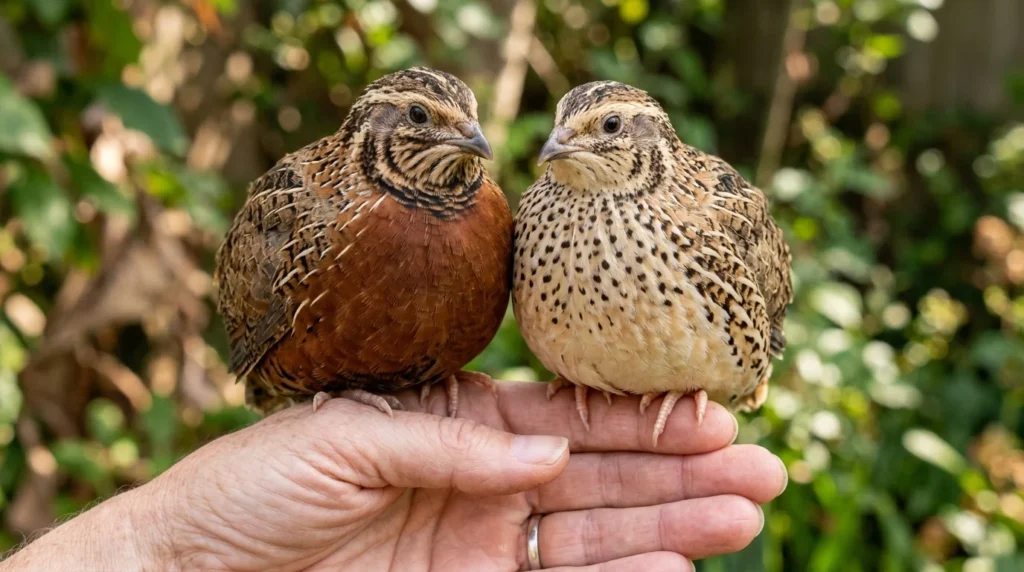
Common practice is to separate males from females around 5-6 weeks, then cull the surplus males not being kept for breeding. A recommended breeding ratio is roughly 1 male to 8-10 females, though some keepers use a tighter 4-5 females per male specifically to maximize fertility rate — both figures show up across experienced keepers, and the right one for you depends on whether fertility or flock calm is the higher priority. Never house more than one male per cage: males will fight, sometimes viciously, and a consistently aggressive male should be separated immediately rather than left to disrupt the flock.
What Are the Basics of Coturnix Quail Breeding?
Successful coturnix quail
breeding starts with pairing strategy — deciding whether you’re running a
single dominant male across several hens or managing distinct breeding pairs. Quail
bird breeding for fertile egg production requires close attention to the
male-to-female ratio described above, since too many males in one space
undermines both fertility and flock peace. Selecting breeding stock
selection from your best layers or most desirable Celadon or Jumbo lines,
rather than breeding indiscriminately, is what separates a deliberate breeding
program from simply letting a mixed flock reproduce on its own.
Do Quail Mate for Life?
No, quail do not mate for life — unlike some bird species, Coturnix quail don’t form permanent pair bonds, and a male will typically breed with every hen in his enclosure. This makes breeding pair stability less of a concern for quail keepers than it might be with a species that does pair-bond, and it’s part of why the ratio-based approach above works better than trying to manage monogamous pairs.
How Does Quail Egg Production and Handling Work?
Egg output is one of the biggest reasons keepers choose quail over chickens in the first place — hens start laying young, produce almost daily once mature, and the whole cycle from hatch to egg-to-plate management moves at a pace no chicken breed can match. Getting the details right — collection habits, storage, and knowing which eggs are actually food-safe — is less about hard rules and more about consistency: a keeper who collects daily and handles eggs correctly will rarely run into quality problems. For exact laying-age timelines, annual output figures, freshness testing, proper cleaning methods, and a full nutritional comparison against chicken eggs, see our complete quail egg guide.
Can You Sell Quail Eggs for Profit?
Yes — quail eggs and meat can be sold at farmers market sales and to specialty grocers, and even a modest laying flock can generate meaningful supplemental income for a backyard operation. This niche egg market tends to reward keepers who can supply consistently rather than sporadically, since specialty buyers value reliability as much as volume.
How Much Should You Sell 12 Quail Eggs For?
Pricing varies significantly by region and buyer type, with per-dozen pricing factors including local demand, whether eggs are sold direct-to-consumer or through a retailer, and how much local market rate variation exists in your specific area — checking what nearby specialty grocers or farmers markets currently charge is the most reliable way to set a starting price.
How Do You Raise and Process Quail for Meat?
Meat production runs on a different timeline than egg production, and understanding both lets a keeper plan a flock that does either — or both — deliberately rather than by accident.
What's the Timeline and Yield for Raising Quail for Meat?
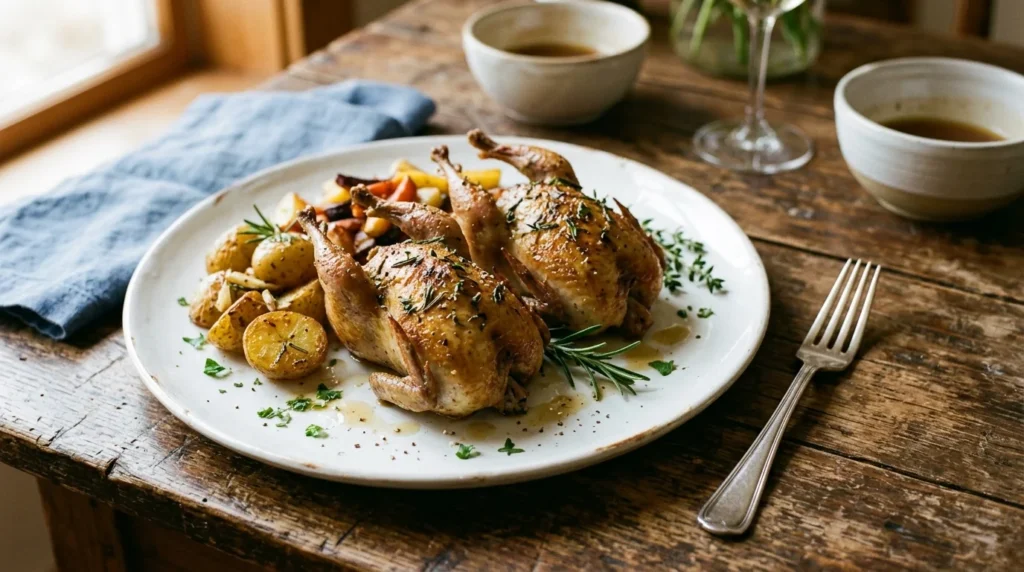
Meat-focused keepers typically process birds somewhere in the 6-9 week range, with Jumbo Coturnix the clear standout for speed and yield among quail breeds — it reaches harvest weight in roughly half the time other breeds need. The meat itself is lean, mild, and delicate, often compared to chicken but with a slightly richer flavor that comes through even in simple preparations. For a full breed-by-breed meat comparison, see our complete quail breed guide.
How Do You Process and Butcher Quail?
Processing at home follows the same general principles as any small poultry: humane dispatch, plucking or skinning, cleaning, and chilling before storage. Small-scale keepers commonly process birds in batches of 10-20 birds per batch, then vacuum-sealing and freezing the dressed birds for later use. Given the bird’s small size, the actual cleaning step goes faster than most people expect once the first bird or two establishes the rhythm.
How Do You Keep Quail Healthy Day to Day?
Quail are generally low-maintenance, but staying ahead of health problems comes down to a short list of daily habits and recognizing a handful of routine, non-disease issues that show up often enough to know on sight.
What Are the Most Common Quail Health Issues?
Beyond the infectious diseases covered in our complete quail care guide, three routine issues come up often enough to flag on their own. Feather pecking — bald patches and wounds on the back or head — usually traces back to overcrowding, boredom, or protein deficiency, and more space plus adequate protein resolves most cases. Egg-bound hens show straining and a swollen abdomen, often from calcium deficiency or obesity, and oyster-shell supplementation alongside an appropriate diet is the standard prevention. Heat stress — panting, wings held out, reduced egg output — is prevented with shade, airflow, and electrolytes in the water during hot stretches.
What Daily Care Practices Keep a Flock Healthy?
A quick morning check during feed and water refresh catches most problems early: look for any bird that’s isolated, hunched, or avoiding food, since bright eyes, activity, and a full crop by end of day are the signs of a healthy flock. Avoid housing quail with chickens altogether, since chickens can physically bully quail and carry diseases like Marek’s disease that hit quail especially hard. For symptom-by-symptom disease recognition, treatment guidance, and a full prevention checklist, see our complete quail care guide.
How Does Weather Affect Quail Care?
Quail handle a surprisingly wide temperature range well without needing anything elaborate — the two things that actually matter are keeping water from freezing in winter and keeping birds shaded and cool in summer, since heat stress affects quail more than most other poultry. For a full cold- and hot-weather setup breakdown, see our complete quail care guide.
What Mistakes Do Beginners Make When Raising Quail?
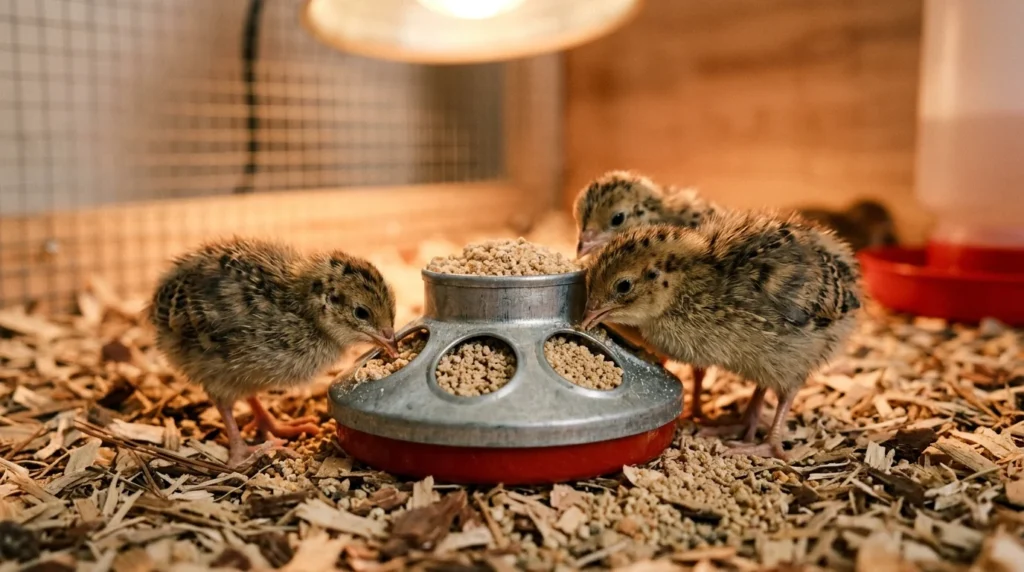
The most common beginner mistake is feeding chicks standard chicken starter instead of a properly high-protein game bird starter, which quietly stunts growth without an obvious cause. Overcrowding — in the brooder or in adult housing — is the second most frequent error, leading to stress, feather pecking, and reduced laying that many new keepers misattribute to disease rather than density. Deep water dishes that young chicks can drown in, and failing to raise humidity during incubation lockdown, are the two mistakes most likely to cause outright losses rather than just underperformance. On the housing side, more than one male per enclosure reliably triggers fighting, insufficient ventilation in hot weather compounds heat stress, and damp or dirty pens invite odor, pests, and disease in equal measure. Finally, skipping a local ordinance or HOA check before starting a flock is an administrative mistake that costs far more time to fix after the fact than it would have taken to check up front.
What Do Most Quail Farming Guides Leave Out?
A few details rarely make it into standard quail-keeping guides, despite being genuinely useful for avoiding costly surprises. The Celadon gene’s inheritance pattern is one — many keepers assume any Celadon-labelled bird guarantees blue eggs, when in fact only a double-copy carrier reliably passes that trait on. Another is quail vocalization: unlike a rooster’s crow, male quail make a soft, songbird-like call rather than a disruptive noise, and hens make a gentle purring or cooing sound — a detail that matters a lot to anyone worried about noise complaints in a tight suburban lot.
The rat-predation risk deserves more attention than it usually gets, since rats are frequently overlooked in favor of more obvious predators like hawks or raccoons, despite being documented as capable of tunneling under a pen’s foundation and destroying an entire flock over time. The annual flock rotation practice — processing and replacing the whole flock on a yearly cycle rather than keeping birds long-term — is another detail experienced keepers rely on that rarely gets explained to beginners, even though it directly affects both egg quality and meat yield as birds age past their second year. And the basic biosecurity habit of changing clothes after visiting another farm or poultry show is simple enough that it’s easy to skip, but it’s genuinely one of the most effective disease-prevention steps a keeper can take.
How Do You Start a Quail Farm Step-by-Step?
Starting a quail farm follows a logical sequence, and doing the steps in order avoids the most common early mistakes.
How Do You Start a Quail Farm?
Begin by deciding your goal — eggs, meat, or both — since that determines breed choice. From there: choose a sourcing method (hatching eggs, day-old chicks, or a local breeder), set up an incubator if hatching your own, prepare a brooder before chicks arrive, and build or buy predator-proof adult housing before the birds need it. Stock feed appropriate to life stage, confirm local ordinances and zoning before finalizing your setup, and establish a daily routine for food, water, and health checks. If you’re planning to breed, decide your male-to-female ratio in advance and have a plan for surplus males before they reach maturity.
What Equipment Is Needed for Quail Farming?
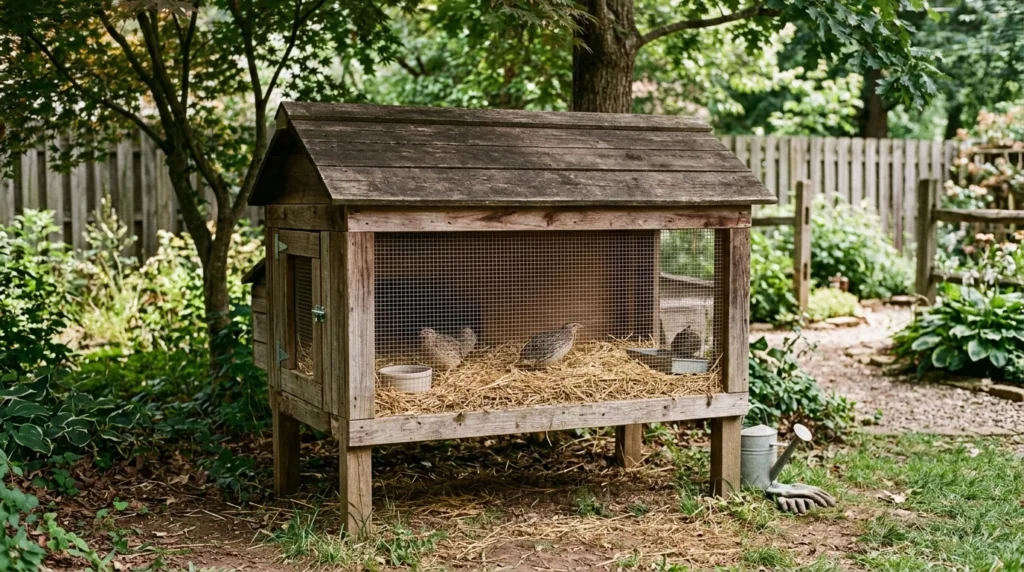
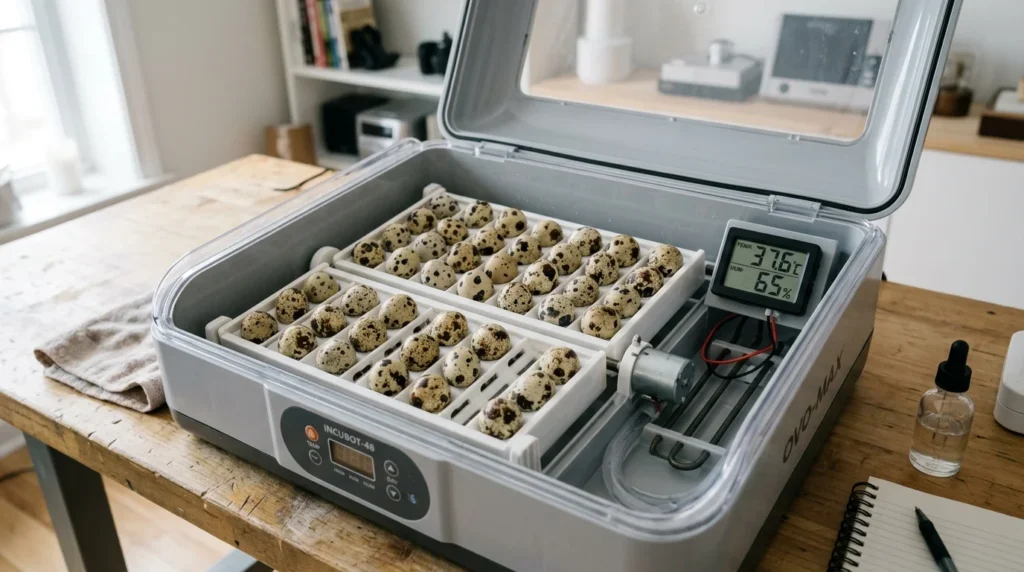
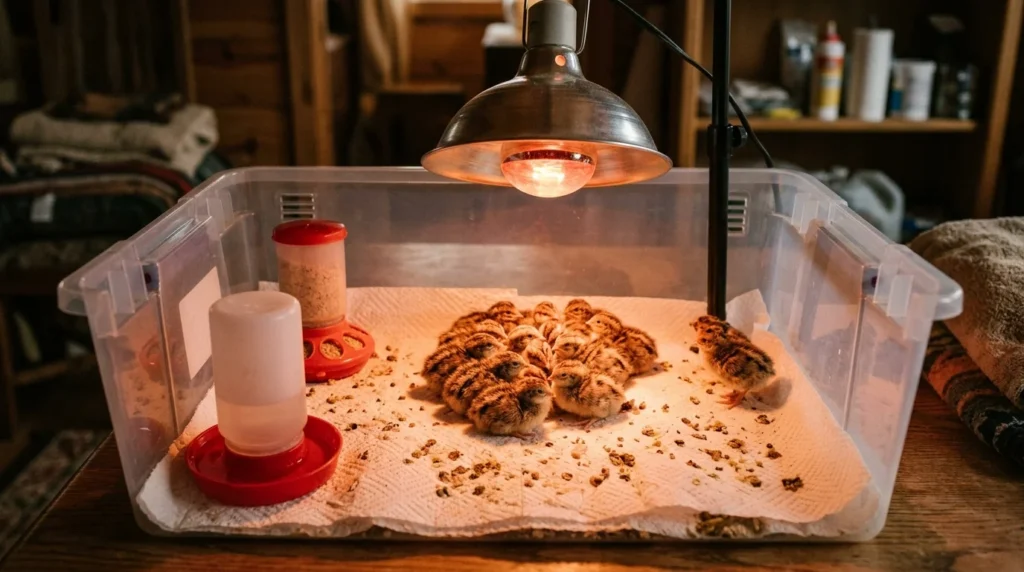
The core equipment checklist covers four categories: an incubator (with turner, thermometer, and hygrometer) if hatching your own eggs, a brooder setup with heat source and drowning-proofed waterer for chicks, predator-proof adult housing built with fine hardware cloth, and appropriately sized feeders and waterers for whichever stage your birds are at. A minimum viable setup for a first flock of five to six birds can be assembled without any specialized tools — most of this equipment is either simple to build or available ready-made from poultry suppliers
Frequently Asked Questions
Do you need a rooster/male to get eggs?
No. Hens lay without a male present — a male is only needed for fertile, hatchable eggs. An all-female flock is actually more peaceful and space-efficient if your only goal is table eggs.
Can quail be kept with chickens?
Generally, no. Chickens can physically injure quail and can carry diseases that hit quail especially hard, so separate housing is the safer choice even if the species seem compatible on the surface
What's the best temperature range for adult quail?
Roughly 60-90°F. Adult quail are fairly cold-hardy once fully feathered, but shouldn’t face prolonged freezing, and heat above 95°F becomes dangerous without good ventilation and shade.
Can I keep quail if my city bans chickens?
Often yes — many ordinances classify quail separately from chickens — but this should always be verified with local animal-services regulations before starting, since it varies significantly by city.
Do quail smell or attract pests?
Clean, dry, well-ventilated pens stay largely odor-neutral. Spilled feed is the main pest attractant, so tight feeders and daily spot-cleaning matter more for odor control than the birds themselves do.
Do I need a permit to raise quail?
Coturnix generally don’t require a permit. Native or regulated species like Bobwhite may require a game bird breeder’s license depending on your state — confirmed as a requirement in Texas specifically.
How long do quail live, and when do they lay best?
Most quail live two to three years, with peak egg production concentrated in their first year of laying.
Can I hatch my own quail eggs at home?
Yes — Coturnix eggs incubate in about 17-18 days at roughly 99.5°F with proper humidity control. A stable incubator and good sanitation are the main requirements for a successful home hatch.