
NUTRITION & DIET MANAGEMENT
Optimal Quail Feeding: Diets for Growth & Egg Yield
Complete feeding guidelines covering starter, grower, and layer feeds to maximize bird health, egg shell strength, and growth rate.
28%
Starter Protein
24%
Layer Protein
3.5% - 4%7
Calcium Level
25-30g
Daily Feed / Bird
Why Does Optimal Quail Feeding Matter for Growth and Egg Yield?
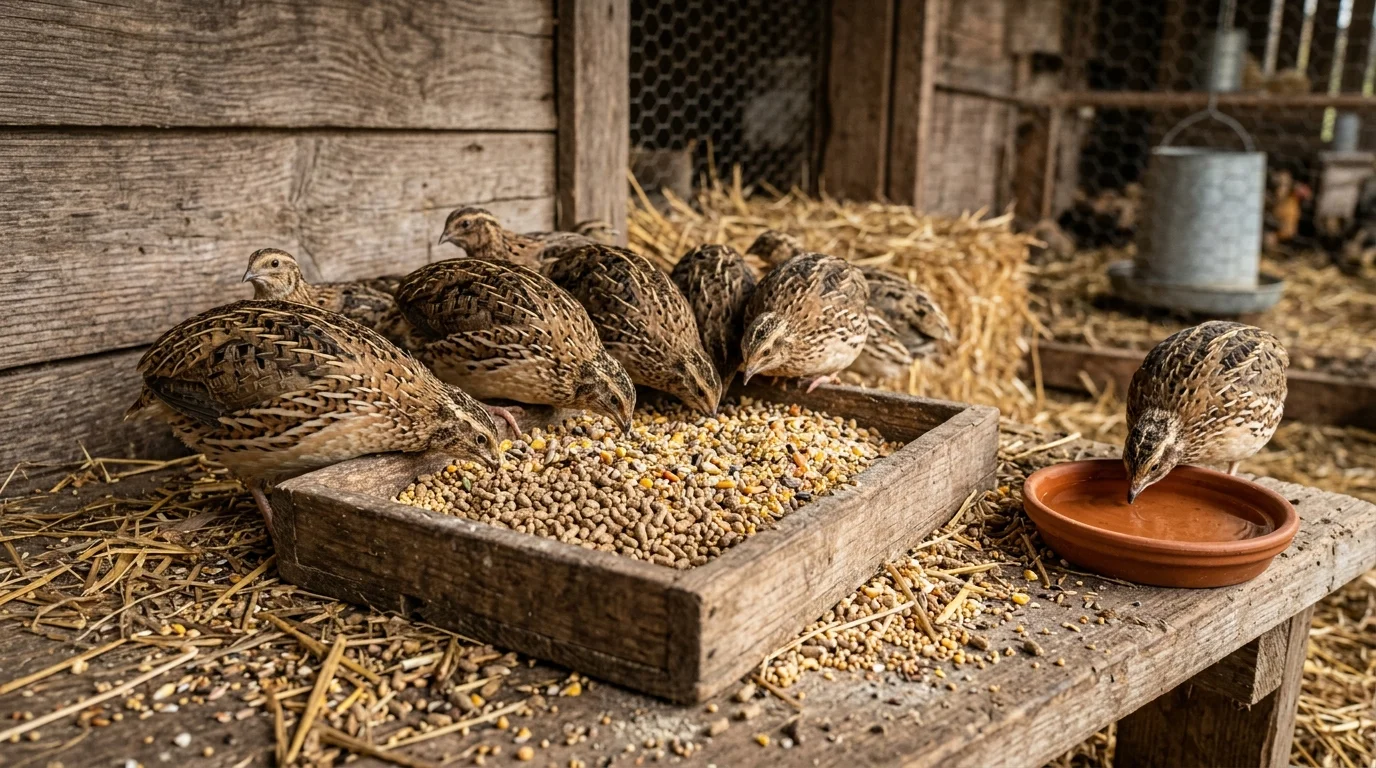
The right feed is the single biggest lever a keeper has over how fast quail grow and how many eggs they lay. Coturnix quail (also called Japanese quail) reach egg-laying age in as little as 6-8 weeks, and a healthy hen on a properly formulated diet can produce close to 300 eggs per year — but only if the correct feed is matched to her life stage. Feed the wrong protein level at the wrong time, and growth stalls, feathering lags, and egg output drops even when supplemental light is used to push production through the winter months. Quail are unusual among backyard poultry species because their fast maturity and minimal space requirements make them forgiving of a lot of keeper mistakes — except nutrition. Their small body size and rapid metabolic rate mean they need a higher-protein diet than standard chicken feed provides at almost every stage of life. Feeding a species-appropriate feed isn’t a nice-to-have; it’s the difference between a covey that thrives and one that limps along on a diet built for a different bird entirely. This guide walks through the full arc of quail nutrition — from starter feed for day-old chicks through layer feed for a productive, healthy flock, covering base ration formulation, feed conversion, water, calcium, grit, safe treats, toxic foods, and the practical mechanics of feeders and feed sourcing. Whether the goal is maximising growth performance or steady egg productivity, the sections below give backyard poultry keepers and experienced quail keepers alike a complete, stage-by-stage reference.
What Do Quail Eat? Core Diet and Protein Requirements by Life Stage
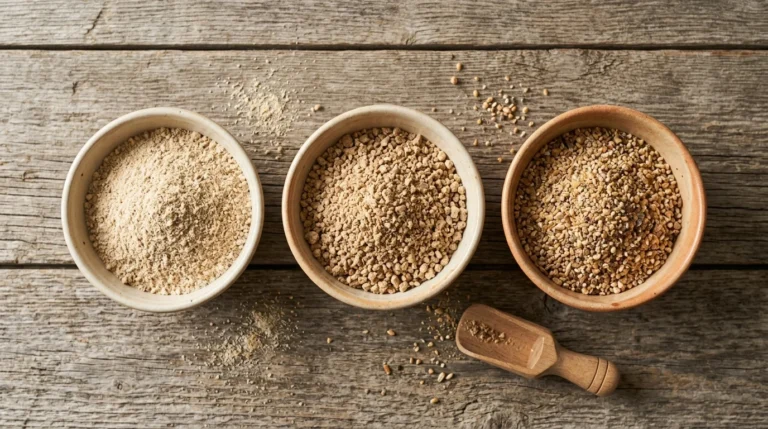
Quail eat a crumb-based commercial ration that shifts in protein density as they move from hatching through egg production. A day-old chick starts on a game bird starter crumble running 28% to 30% protein, transitions to a grower/finisher ration around 22% to 24% protein, and finally settles onto either a breeder ration near 18% to 20% protein or a layer feed in the 20% to 22% protein range once egg-laying begins. Because most feed mills don’t stock a quail-specific bag in every region, many keepers substitute turkey layer feed, which sits close enough in nutrient profile to work as a reliable stand-in. Matching protein to life stages matters because quail convert feed into tissue and eggs far more efficiently than larger poultry, but only when amino acids like methionine and lysine are present in the right ratio alongside adequate metabolizable energy. Underfeed protein during the growth phase and the feed conversion ratio suffers — birds eat more to gain the same weight, and hens that do reach lay often produce smaller, less frequent eggs. The protein density of each stage’s ration is the variable experienced keepers watch most closely, more so than total feed volume.
What Should You Feed Baby Quail Chicks in the First Week?
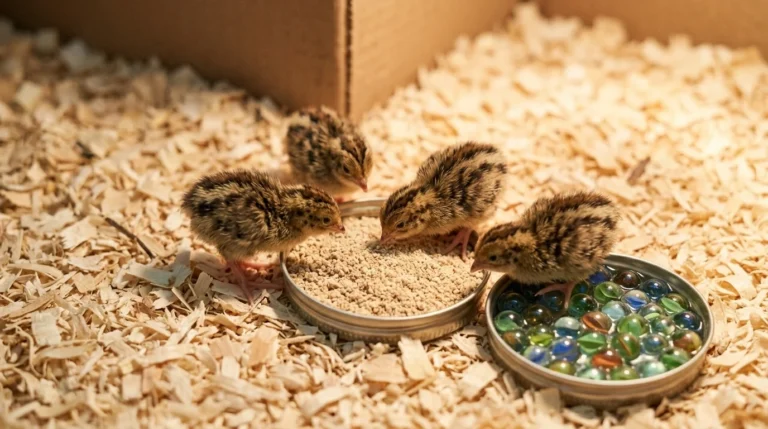
Baby quail chicks need a high-protein chick crumb as their quail chick food from hatch to about 5 to 6 weeks of age, and getting the right feed for quail chicks in place from day one sets the tone for everything that follows. The most common choice is a non-medicated turkey starter crumb or a dedicated game bird starter crumble at 28-30% protein, chosen specifically because standard chick starter for chickens runs too low in protein for a quail’s growth rate. Texture matters as much as protein percentage — day-old chicks have tiny beaks, so the feed needs a fine crumble texture rather than pellets, and it should be available at all times as part of a consistent brooder feeding schedule. Some keepers grind commercial chick starter mash even finer for the first few days to make it easier for hatchlings to peck, then transition to the standard crumble size by the end of week one. Whatever the source, avoid medicated formulations meant for chickens, since the coccidiostat levels aren’t calibrated for a quail’s smaller body weight.
Baby quail chicks need a high-protein chick crumb as their quail chick food from hatch to about 5 to 6 weeks of age, and getting the right feed for quail chicks in place from day one sets the tone for everything that follows. The most common choice is a non-medicated turkey starter crumb or a dedicated game bird starter crumble at 28-30% protein, chosen specifically because standard chick starter for chickens runs too low in protein for a quail’s growth rate. Texture matters as much as protein percentage — day-old chicks have tiny beaks, so the feed needs a fine crumble texture rather than pellets, and it should be available at all times as part of a consistent brooder feeding schedule. Some keepers grind commercial chick starter mash even finer for the first few days to make it easier for hatchlings to peck, then transition to the standard crumble size by the end of week one. Whatever the source, avoid medicated formulations meant for chickens, since the coccidiostat levels aren’t calibrated for a quail’s smaller body weight.
What Should You Feed Quail During the Grower Stage (6–8 Weeks)?
From roughly 5 to 6 weeks onward, quail move onto a grower/finisher ration, often a game bird grower crumble, at 22% to 24% protein, stepping down from the starter’s protein density while still supporting rapid weight gain. This is the feathering stage, when birds are visibly filling out and, for meat-purpose flocks, approaching slaughter weight — a period where a turkey feed formulated for meat birds often serves as a practical substitute if a dedicated quail grower isn’t available locally. Protein isn’t the only thing dropping at this stage; energy density and mineral levels also shift to support skeletal development rather than the explosive early growth of the first six weeks. Watching body condition through this window — rather than sticking rigidly to a calendar date — helps keepers judge when a particular hatch is ready for the next dietary step.
What Should You Feed Quail at the Layer and Breeder Stage (8+ Weeks)?
Quail classified as layers 8+ weeks move onto either a breeder ration at 18-20% protein or a dedicated layer feed at 20-22% protein, with the switch typically introduced gradually rather than as a hard cutover. This gradual introduction usually starts around weeks 8 to 10, timed to coincide with point-of-lay, and is often paired with a photo stimulation lighting program that extends daylight hours to trigger consistent laying. Breeder rations differ slightly from straight layer feed in that they’re balanced for fertility and hatchability as well as shell quality, which matters for keepers hatching their own replacement stock rather than only collecting table eggs. Either formulation, though, needs to stay in place consistently — switching a laying hen’s protein level abruptly tends to show up as a dip in egg output within days.
What Protein Percentage Should Quail Feed Have?
Quail feed protein should fall between 25% to 32% protein for growing birds and 17% to 23% protein for adults in lay, depending on exact life stage. Beyond crude protein, a complete feed tag should list crude fat, crude fiber, calcium percentage, phosphorus percentage, and salt NaCl — collectively the guaranteed analysis that tells a keeper whether a bag actually meets a quail’s needs rather than just approximating them. These numbers, read together, also explain a lot about feed intake patterns — a ration too low in energy or too high in fiber often pushes birds to eat more just to meet their caloric needs. The crude protein minimum printed on a feed tag is a floor, not a target, and mills sometimes pad it with lower-quality plant protein that doesn’t deliver the same amino acid profile as a well-formulated game bird ration. Reading past the headline protein number to check fat and fiber levels gives a more complete picture of whether a bag is genuinely built for quail or simply relabeled poultry feed.
What Feed Form, Daily Quantity, and Feeding Method Work Best for Quail?
Quail do best on ad-lib feeding — constant access to feed rather than scheduled meals — using either a crumble, pellets, or a seed/pellet mix depending on age and preference. A hopper-style feeder with anti-spill fingers cuts down feed wastage dramatically compared to an open feed trough, since quail are enthusiastic scratchers and will fling loose feed out of anything without a lip or guard. Adult birds average around 15g per day when given constant feed access, and because quail naturally self-regulate intake, overfeeding via free-choice feeding is rarely a concern the way it can be with some other livestock. A large-capacity feeder reduces refill frequency, which matters more than it sounds for anyone managing more than a small backyard covey.
How Much Feed Does a Quail Eat Per Day?
An adult quail eats roughly 15g per day under normal ad-lib access, though the exact daily feed quantity shifts with temperature, activity level, and whether the bird is actively laying. This is the number most keepers use to answer “what do quails eat daily” in practical terms — it’s a daily ration small enough that even a modest feed consumption rate across a flock of twenty birds only amounts to a few hundred grams total. Hens in active lay typically sit at the higher end of that range, since egg production is metabolically expensive, while birds molting or in cooler weather may eat somewhat more to maintain body temperature.
How Often Should You Feed Quail?
Quail should have feed available essentially all day through ad-lib feeding rather than on a fixed schedule, because they naturally self-regulate intake in small, frequent bouts throughout daylight hours. Continuous feeding with constant access is the standard recommendation — trying to ration meals on a schedule tends to create stress and pecking-order competition without any real benefit. In practice, this means a feeding frequency of one check per day is often sufficient for a well-sized hopper, though a twice-daily refill is safer for smaller feeders or larger flocks to avoid any stretch of time with an empty trough.
Can Fermented Feed Benefit Quail?
Fermented feed can benefit quail by improving nutrient absorption and supporting gut health, though it requires more hands-on preparation than dry feeding. The fermentation process — typically soaking grains for 24-48 hours to encourage lacto-fermentation — introduces beneficial probiotics and is associated with improved digestibility and better natural preservation of the ration compared to dry storage. Keepers who switch to fermented feed generally report it as a supplemental practice rather than a full replacement for a balanced commercial ration, since fermentation changes texture and moisture content more than it changes core nutrient composition. It’s worth trying for flock gut health, but it shouldn’t be the only strategy relied on for meeting protein targets.
How Long Does Quail Feed Stay Fresh?
Quail feed shelf life runs roughly one to two months when kept in cool dry storage, and noticeably less once a bag is opened and exposed to humidity. An airtight storage container slows oxidation and protects against rancidity, while also blocking feed mold and weevils, both of which set in faster in warm, damp conditions than most keepers expect. Feed freshness matters more for quail than it might for larger birds, since the fat content in high-protein game bird rations degrades and turns rancid over time, reducing the very protein and energy density the diet was chosen for in the first place. Buying feed in quantities that get used within a few weeks, rather than stockpiling large bags, keeps this risk low.
How Much Water Do Quail Need, and How Should You Provide It?
Quail need clean fresh water available at all times, since dehydration sets in quickly given their small body size and high metabolic rate. Water is often the most overlooked essential nutrient in a feeding plan, but it directly affects egg production — even short gaps in access can trigger an egg production decline that takes days to recover from. Water containers need to be shallow and stable, because a full-depth dish poses a real chick drowning risk for young birds still building coordination. Keepers should refresh waterers twice daily, especially through warm weather and summer, to keep the water source free of droppings and algae buildup that quail otherwise avoid drinking from — and adding electrolytes during heat stress or after a health setback can help birds rehydrate faster than plain water alone.
How Much Water Do Quail Drink Daily?
Quail typically drink close to double their daily feed quantity in water, which in practice works out to a modest but steady volume depending on temperature. Daily water intake rises sharply in warm-weather water needs, since panting and evaporative cooling burn through hydration fast for a small-bird hydration profile that has very little buffer against dehydration risk. Tracking the water consumption rate across a flock is a useful early-warning sign of illness — a sudden change, up or down, in how much water disappears from the waterer each day is often the first visible symptom before anything shows up in behavior or egg counts.
How Do You Set Up a Safe Quail Watering System?
A safe quail watering system starts with a shallow water dish filled with marbles or pebbles for chicks, and can graduate to a nipple waterer or gravity waterer once birds are past the drowning-risk stage. A chick-safe waterer design matters most in the first two weeks, since even an inch of standing water is enough to be dangerous for a hatchling that hasn’t fully developed its balance. For adult birds, an automatic watering system cuts down on daily maintenance considerably, though regular waterer cleaning is still necessary regardless of design, since quail will splash bedding, feed, and droppings into any open dish given the chance. Drowning prevention and easy cleaning are really the two design priorities that should guide any setup, whether homemade or store-bought.
How Should You Supplement Calcium for Egg-Laying Quail?
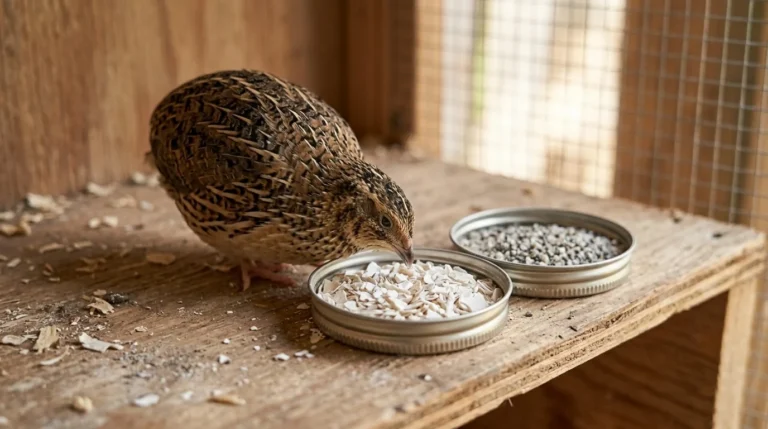
Egg-laying quail need supplemental calcium beyond what most base rations provide, because eggshell production draws down calcium reserves faster than a standard layer feed alone can replace. A properly formulated layer ration runs around a calcium ratio 2.68%, which supports eggshell production in most layers and laying hens, but offering free-choice supplemental calcium alongside the base diet gives hens the flexibility to take more on heavy-laying days. Most of that calcium comes in the form of calcium carbonate, and its absorption depends heavily on adequate vitamin D3 in the diet — without it, even a calcium-rich ration doesn’t translate efficiently into shell strength. Without adequate calcium, the first visible sign is usually soft-shelled eggs, followed over time by more serious issues like egg-bound hens or, in chronic calcium deficiency, thinning bone density as the body pulls calcium from the skeleton to maintain shell quality. Getting the protein and calcium balance right isn’t just about eggshell thickness — it protects the hen’s own health as much as it protects egg quality.
Does Oyster Shell Improve Quail Eggshell Strength?
Yes, oyster shell offered as free-choice calcium reliably improves eggshell strength in laying quail. Crushed oyster shell grit gives hens a concentrated calcium source they can access on demand, which is particularly useful for correcting or preventing soft-shelled eggs without having to increase the calcium level of the entire base ration — something that can actually harm non-laying birds if overdone. Because oyster shell works on a free-choice basis, hens self-regulate how much they eat relative to their current laying rate, making it one of the safer and more precise ways to manage shell quality across a mixed-age flock.
Can Quail Eat Crushed Eggshells?
Yes, quail can eat crushed eggshells as a home-sourced calcium supplement, provided the shells are properly sanitized first. The standard method for sanitizing eggshells is having shells rinsed, baked, boiled, or microwaved before crushing, which eliminates bacterial risk while preserving the shell’s usefulness for calcium recycling — essentially feeding a hen’s own eggshell calcium back into future shell production. This home calcium source works as a reasonable substitute for store-bought calcium powder when oyster shell isn’t readily available, though crushing shells small enough that they aren’t recognizable as eggs is worth the extra step, since some keepers find birds develop egg-eating habits if shell fragments look too much like the eggs themselves.
What Are the Best Calcium Supplements for Quail?
The best calcium supplements for quail are flaked oyster shell, dedicated avian calcium supplement products, and calcium-dense whole foods like dark leafy greens and calcium-rich seeds. A mineral premix blended into homemade feed is another option for keepers formulating their own rations, though it requires more precision than simply offering a free-choice source. Less common but still viable options include a vitamin/mineral water additive or a calcium bolus, both of which some keepers use as a short-term boost during peak laying season rather than a year-round staple. Whatever combination is used, the goal is the same — giving hens a reliable, adjustable calcium source that doesn’t depend on precisely dosing the base feed.
Do Quail Need Grit for Digestion?
Quail benefit from grit as a digestion aid, though the necessity varies depending on how the rest of their diet is managed. Quail grit supports mechanical digestion by helping the gizzard function perform gizzard grinding on whole seeds and fibrous forage, a job the gizzard can’t do on its own without small hard particles to work against. Birds that spend time on dirt or ground foraging often pick up enough incidental grit from the environment to cover their needs, while quail kept entirely on wire or in a fully enclosed setup with no access to soil usually need it offered deliberately. Since quail self-regulate how much grit they consume, there’s little downside to keeping a small dish available regardless of housing style.
Do Quail Need Grit?
Grit necessity for quail comes down mainly to diet composition: they need grit primarily when their diet includes anything beyond a finely ground commercial feed — meaning if seed treats or insect treats are part of the routine, grit becomes important for proper digestion. Commercial feed digestibility is generally high enough on its own that grit isn’t strictly required for birds eating nothing but pellets or crumble, but the moment whole grains or insects enter the picture, a digestive aid becomes worth offering. Quail with regular ground-pen foraging access typically self-source enough small stones and grit particles that supplementation is more of a safety net than a necessity, though offering it costs little and removes any guesswork.
Insoluble Grit vs. Soluble Grit for Quail
Insoluble grit and soluble grit serve two different purposes and shouldn’t be confused with each other. Insoluble grit — usually granite grit or flint grit — stays intact in the gizzard and mechanically grinds food, while soluble grit like oyster shell grit dissolves and functions as a calcium-source grit rather than a true digestive aid. Offering both, in separate containers, lets a keeper cover digestion and calcium needs independently without one interfering with the other. Matching grit particle size to the bird’s age matters too — chicks need a much finer grit than adults, since coarse granite grit sized for a full-grown hen can be difficult for a young bird to swallow and use effectively.
What Treats, Forage, and Supplemental Foods Can Quail Eat?
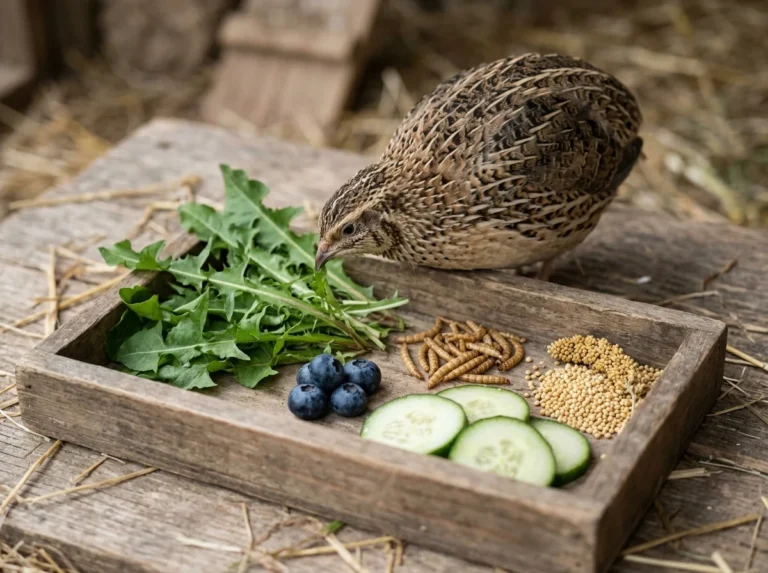
Quail can eat a wide range of quail treats and forage as long as it stays around 10% of the diet or less, with the base commercial ration doing the nutritional heavy lifting when it comes to picking the best treats for quail. Treats, forage, and other supplemental foods add dietary variety and support natural behaviour, but moderation is the operative word — too much of even a healthy treat can dilute the protein and mineral balance the base feed was formulated to provide. Offering variety through a portable quail tractor or rotating forage patches encourages natural foraging behaviour, which has real welfare value beyond just nutrition — it gives birds something to do with their day and reduces boredom-driven behaviours like feather pecking. Foraging enrichment is worth building into a routine even for keepers who aren’t chasing maximum egg output, simply because it keeps a flock more active and engaged.
What Vegetables and Fruits Are Safe for Quail?
Safe vegetables and fruits for quail include cucumber, carrots, broccoli, cabbage, peas, and a wide range of berries and orchard fruit offered in moderation. Common safe choices include currants, grapes, apples, saskatoons, snowberries, strawberries, raspberries, blueberries, pears, plums, bananas, cherries, cooked corn, and pumpkin flesh, all of which quail generally take to readily as produce scraps. Seed and pit removal is essential before offering stone fruit, since pits from cherries, plums, and similar fruit can pose a choking hazard and, in some cases, contain compounds that cause digestive upset. Sticking to fruit moderation — a few small pieces a couple of times a week rather than a daily habit — keeps sugar intake reasonable for birds that don’t need the extra calories on top of a complete feed.
What Leafy Greens Can Quail Eat?
Quail can eat most common leafy garden greens, including fresh grass, clover, plantain, lettuce, spinach, kale, dandelions, and chickweed. Rounding out the list, alfalfa sprouts, carrot tops, beet greens, broccoli, okra, and collard greens all count as safe, nutrient-dense dark leafy greens that pair naturally with a bird’s instinct for ground-pen foraging. Rotating what’s on offer — rather than relying on the same green every day — mimics the weed foraging pattern quail would follow in the wild and keeps a flock from developing a narrow preference that makes future dietary changes harder. A simple greens rotation through a backyard’s existing weeds and garden trimmings is often all that’s needed, with no special sourcing required.
What Grains, Seeds, and Nuts Can Quail Eat?
Quail can eat a broad range of grains and seeds for quail treat mixes, and a good seed for quail blend usually includes wheat, millet, rye, oats, buckwheat, cracked corn, broken rice, barley, sorghum, and quinoa. Higher-fat options like hemp hearts, sunflower seeds, flax, pumpkin seeds, hazelnuts, pecans, cashews, and peanuts work well too, alongside smaller seeds such as poppy seeds, sesame seeds, celery seeds, and chia seeds — though acorns are best avoided due to their tannin content. Beans and lentils deserve a specific caution here: raw or undercooked beans contain a toxic compound that requires thorough cooking to neutralize, while raw or cooked lentils and properly prepared bean sprouts are generally fine in moderation. When mixing a seed mix ratio for regular treat use, most keepers lean on cheap, widely available scratch grains as the base and layer in the higher-fat seeds and nuts more sparingly, since those add up in calories quickly for a bird this small.
Can Quail Eat Mealworms and Other Insects Every Day?
Quail can eat mealworms in small amounts, and while a tiny handful daily won’t hurt, a few times a week is plenty — it’s best treated as a regular supplement rather than a diet staple. Dried mealworms or live mealworms, along with black soldier fly larvae, crushed hard-boiled eggs, crickets, grasshoppers, beetles, moths, caterpillars, ants, spiders, and various other worms all provide a concentrated protein boost that quail actively seek out given the chance. This kind of supplemental protein is especially useful during moult or periods of heavy laying, when a bird’s protein demands climb above what the base ration alone comfortably covers. Keeping the treat ratio modest — a small handful of dried insects or live insects a few times a week — avoids throwing off the overall diet balance while still giving birds access to the insect-hunting behaviour they’d naturally display when using quail tractors or free-ranging.
What Do Quail Eat in the Wild, and How Does It Differ From Captive Feeding?
Wild quail eat a mix of native seeds, insects, and vegetation that shifts with the season, in contrast to the consistent, formulated diet a captive bird receives year-round. The wild quail diet leans heavily on native forage and wild seed foraging, supplemented by insect protein whenever it’s available, reflecting the opportunistic feeding pattern typical of game bird ecology. Seasonal foraging means a wild bird’s protein and energy intake fluctuates considerably — heavier on insects in spring and summer, more seed- and native vegetation-based through fall and winter. Captive feeding removes that variability entirely, trading the natural habitat diet‘s inconsistency for a stable, higher-density ration that supports faster growth and much higher egg output than any wild covey would achieve on foraged food alone
Do Quail Eat Ticks and Other Insects?
Yes, quail eat ticks along with a wide range of other insects as part of their natural foraging behavior. Tick consumption makes quail a genuinely useful form of natural pest control on a property, since insect foraging is instinctive and doesn’t require any special training or encouragement — birds with any amount of ground access will hunt for them on their own. This isn’t just anecdotal; ticks and other small invertebrates function as a meaningful protein source in the wild for quail, which is part of why free-ranging or tractor-based setups tend to produce noticeably active, engaged birds compared to those kept exclusively on formulated feed. As a form of biological pest control, it’s a genuine side benefit of keeping quail with any outdoor access.
Do Quail Eat Grass?
Yes, quail eat grass, particularly tender grass shoots, as part of their normal ground foraging routine. Fresh grass satisfies both a nutritional and behavioral need, tying into the same grazing instinct and greenery foraging pattern seen in wild grazing behavior. Access to a grassy run or rotated forage area lets captive birds express this instinct even on a primarily formulated diet, and most keepers notice quail gravitate toward new grass growth over older, tougher blades whenever given the choice.
What Foods Are Toxic to Quail?
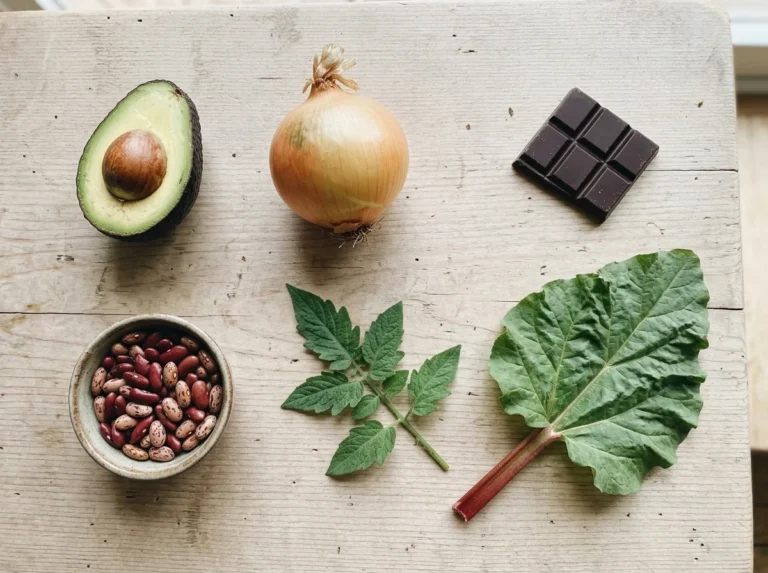
Toxic foods for quail include onions, alcohol, caffeine, avocado, chocolate, and several plant parts that carry natural toxins. The avoid list also covers fruit pits, fruit seeds, raw potatoes, tomato leaves, tomato stems, uncooked raw beans, and rhubarb leaves, all of which can trigger toxicity symptoms ranging from digestive upset to more serious poisoning depending on the amount consumed. Processed foods — anything high in salt, sugar, or artificial additives meant for human consumption — belong on the same avoid list, not because they contain a specific toxin but because a quail’s small body has essentially no tolerance for the sodium and preservative loads common in packaged snacks. When in doubt about a specific item, the safer default is to leave it out of the feeding routine entirely rather than risk exposure to an unfamiliar toxin.
Can Quail Eat Raw Beans or Avocado?
No, quail cannot safely eat raw beans or avocado — both carry compounds that are toxic without proper preparation or in any amount. Raw beans contain legume lectins, a toxic compound neutralized only through thorough cooking; skipping that step, even with beans meant to be a small treat, risks real harm. Avocado is even less forgiving, since persin — the compound responsible for avocado toxicity — has no safe threshold and persin toxicity can affect quail even in small quantities, unlike some toxins where amount matters. Because both foods show up so often in kitchens, it’s worth being deliberate about keeping scraps and trimmings from either one away from a flock’s treat rotation, rather than assuming “just a little” is fine the way it might be with a mildly risky item.
Can Quail Eat Tomatoes?
Quail can eat ripe tomato flesh in moderation, but the plant’s leaves and stems should be avoided entirely. Tomatoes belong to the nightshade family, and the solanine concentrated in tomato leaves and tomato stems carries real solanine toxicity risk, even though the ripe fruit itself is generally considered safe in small amounts. This nightshade caution extends to any garden trimmings — if tomato plants are being cleared or pruned, keeping the green vegetative material away from a run rather than tossing it in as forage avoids an easily preventable exposure.
Which Foods Help With Parasite Prevention in Quail?
Certain herbs and forage plants support parasite prevention in quail by acting as a mild natural dewormer when included regularly in the diet. Pumpkin seeds are the most commonly cited option, alongside aromatic herbs like wormwood, oregano, thyme, rosemary, and mint, all of which have some traditional and anecdotal support for reducing parasite load through herbal supplementation. Beyond herbs, forage plants such as comfrey, lamb’s quarters, burdock, dandelion, stinging nettle, and Canada thistle are frequently included in free-range or forage-heavy setups, either intentionally planted or simply left to grow where a flock can access them. Letting birds self-select forage from a patch containing a mix of these plants tends to work better than force-feeding any single item, since quail instinctively browse more of what their body seems to need. This approach works best as a preventive habit rather than a treatment for an active infestation, which still calls for a proper veterinary diagnosis and targeted treatment. What herbal forage does reliably support is general immunity support and gut resilience, making it a useful complement to — not a replacement for — standard parasite management practices.
How Does Quail Feed Differ From Standard Chicken Feed?
Quail feed differs from standard chicken feed mainly in protein requirements — quail need substantially more protein at every life stage than a chicken diet is built to provide. Game bird formulation accounts for the faster growth rate and smaller body size of quail, and where a dedicated bag isn’t available, a turkey feed substitute generally bridges that gap far better than regular chicken feed does. The crude protein comparison between the two tells the story clearly: standard chicken starter often sits in the high teens to low twenties for protein, while quail need to start closer to 28-30%. These feed formulation differences aren’t cosmetic — they reflect real, measurable nutritional needs tied to how quickly quail mature relative to chickens, and using a dedicated feed designed for their life stages produces noticeably better growth and lay rates than defaulting to whatever chicken feed happens to be on hand.
Gamebird Starter vs. Chicken Starter: Which Should You Use for Quail?
Gamebird starter is the better choice for quail over chicken starter, primarily because of the protein gap between the two. A starter feed comparison shows game bird starter typically running 28-30% protein against chicken starter’s roughly 18-20%, a gap that directly reflects quail’s higher protein needs during their compressed growth window. This isn’t a marginal difference that can be shrugged off — the nutrient density comparison between the two feeds means chicks raised on chicken starter alone tend to grow slower and reach a smaller adult size than genetically comparable birds raised on properly formulated gamebird starter.
Can Quail Eat Chicken Layer Mash?
Quail should not be fed chicken layer mash as a primary diet, mainly because of a calcium mismatch between what layer mash provides and what a quail actually needs. Layer mash is formulated with calcium levels calibrated for a chicken’s much larger body and shell size, which creates a real calcium excess risk and potential kidney stress when fed to a quail long-term — on top of a low-protein risk, since layer mash protein is typically lower than what an actively laying quail hen requires. This kind of layer feed substitution might seem harmless in a pinch, but sustained use of chicken layer mash tends to show up over weeks as declining egg quality and, eventually, health problems tied to the mineral imbalance rather than any immediate visible symptom.
Where Should You Buy or Source Quail Feed: Commercial vs. DIY?
Quail feed can be sourced either as a bagged commercial quail feed product or mixed at home as homemade quail feed, and the right choice usually comes down to flock size, budget, and how much control a keeper wants over exact ingredients. DIY quail feed appeals to keepers formulating a quail food mix tailored to what’s locally available, while quail bird food bought pre-made trades some of that control for convenience and consistency. A feed cost comparison between the two options doesn’t always favour DIY the way people assume — buying individual grains and minerals in small quantities to hit a custom feed ratio can end up costing more per pound than a bag of properly formulated coturnix quail food, unless purchased in bulk or sourced directly through a feed mill. Whichever route is chosen, matching the actual protein and mineral content to what’s needed for the specific life stage matters more than the source of the feed itself.
What Are the Best Commercial Quail Feed Options?
The best commercial quail feed options are bags specifically labeled for game birds or quail, sourced through feed-store sourcing rather than general pet-store poultry aisles. Commercial quail feed and other quail feeds are increasingly available as bagged feed, though feed brand availability still varies significantly by region, with some areas having ready access to dedicated game bird feed for quail and others relying on the turkey-feed substitutions covered earlier. Checking the feed tag against the protein targets for the current life stage remains the best way to judge quality regardless of brand, since not every bag marketed toward “game birds” hits the same protein percentage.
How Do You Make Homemade or DIY Quail Feed?
Homemade quail feed is made by blending a grain blend recipe — typically corn, wheat, and other grains — with a concentrated protein source and mineral premix to reach a balanced ratio formulation matching commercial targets. Homemade quail feed, DIY quail feed, and a properly mixed quail food mix all describe the same basic approach: combining a custom feed blend of ingredients to hit the right protein, calcium, and energy levels for a given life stage. Getting this right requires more precision than most first-time mixers expect — undershooting protein or missing a mineral premix entirely is a common mistake that produces a diet that looks complete on paper but underperforms in practice. Keepers going the DIY route are well served by testing a batch against a commercial feed’s growth and lay results before committing a whole flock to it long-term.
What Is the Best Quail Feed for Coturnix and Other Breeds?
The best coturnix quail food generally follows the same standard protein targets used throughout this guide, though breed variation in needs means larger strains benefit from slightly more generous feeding. Jumbo Coturnix, bred specifically for larger body size, tend to do well on the same best quail feed formulations as standard-sized birds, just with marginally higher total daily intake to match their bigger frame. This kind of breed-specific feeding adjustment is more about quantity than formulation — the protein percentages and mineral targets covered earlier apply broadly across Coturnix strains and most other common quail breeds, with body size being the main variable that shifts how much of that feed a given bird actually needs each day.
What Feeders and Feeding Equipment Work Best for Quail?
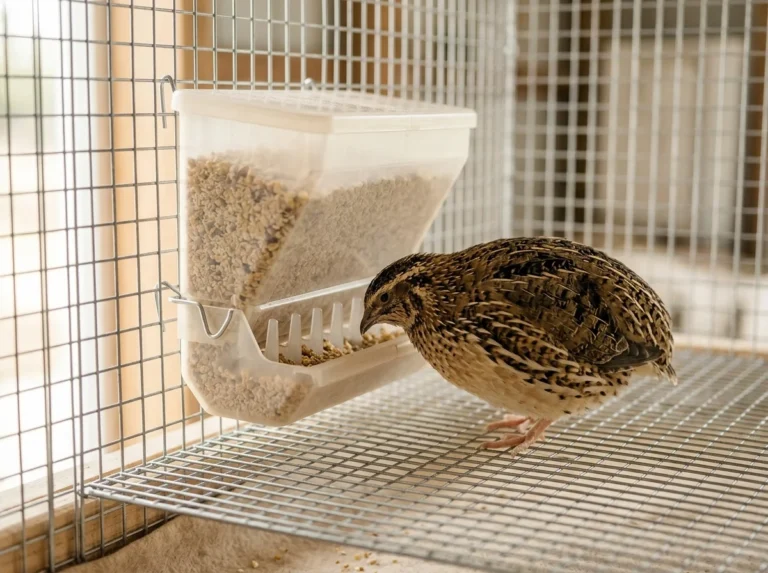
The best feeders for quail use an anti-spill-finger hopper design that limits how much seed mix and loose feed birds can fling out while foraging through it. Quail feeders built this way significantly cut feed wastage compared to open troughs, and the design matters more for quail than for chickens, since quail dig through feed searching for preferred seeds with more enthusiasm than most other poultry. Beyond the anti-spill mechanism, feeder design choices generally fall into a few categories — a tube feeder for gravity-fed dispensing, a treadle feeder that only opens under a bird’s weight, or a fully automatic feeder for hands-off management. Each solves the wastage and pest-access problem slightly differently, and the right pick usually depends on flock size and how much daily hands-on management a keeper wants.
How Do You Stop Quail From Wasting Feed?
Quail waste less feed when fed through an anti-spill hopper rather than an open dish, since the design physically limits how much a bird can scatter while digging for its preferred seeds. This kind of feeder-design tweak — sometimes marketed as quail guard feed equipment — addresses feed spillage at the source rather than trying to manage it after the fact. A well-designed feeder lip design keeps birds from being able to fling feed over the edge with their beaks, which is the primary mechanism behind most feed-wastage reduction strategies; simply switching from an open pan to a lipped or guarded feeder often solves the majority of the problem on its own.
What Does the Best Quail Feeder Setup Look Like?
The best quail feeder setup combines a hopper feeder with large-capacity storage, positioned at a height and location that gives every bird in the pen fair access. Feeder placement matters for reducing competition — placing feeders away from a single crowded corner encourages multi-bird access and cuts down on the pecking-order stress that develops when subordinate birds get pushed away from the only food source. Feeder height should sit low enough for quail’s short stature but high enough to avoid excessive bedding and droppings getting kicked into the feed, a balance that usually takes a bit of trial and adjustment in any new setup.
Wild Quail Feeders vs. Backyard Feeders: What's the Difference?
Wild quail feeder designs differ from backyard feeders mainly in purpose — wild feeders are built as a ground feeding station or hunting feeder meant to attract free-ranging birds for observation or hunting management, while backyard feeders are built to serve a contained, owned flock. A game feeder aimed at wild quail often incorporates predator-resistant feeder features, since it sits unattended in open habitat rather than inside a secured coop or run. Backyard feeders, by contrast, can prioritise wastage reduction and ease of cleaning over predator resistance, since the surrounding enclosure is already handling that layer of protection. The two feeder categories solve genuinely different problems, even though they’re feeding the same species.
What Does a Mixed-Feed Practice From an Active Quail Keeper Look Like?
Many experienced keepers run a mixed feed practice, blending starter feed and layer crumble in roughly a 1:1 ratio rather than switching abruptly between the two. This blended ration approach smooths out the protein transition for birds of mixed ages in the same pen, and it’s particularly common among keepers who hatch in batches, ending up with birds at several different life stages sharing one feeding setup at the same time.
Higher-protein starter feed mixed into the base layer ration also gets used seasonally — many keepers bump the starter proportion up during winter feeding, reasoning that the extra protein and energy support birds through cold stress even outside of active growth. This kind of seasonal feed switching isn’t strictly necessary by the book, but it reflects a practical, field-tested adjustment that’s common enough among long-time keepers to be worth mentioning.
Any surplus feed left over from a batch mixed slightly off-ratio typically gets folded into the next mix rather than discarded, and this informal feed rotation strategy — using up what’s on hand while still generally tracking toward the target protein range — is closer to how most real flocks are actually managed day to day than the precise stage-by-stage numbers might suggest on their own.
How Do You Transition Quail Between Feeding Stages?
Quail should be transitioned between feeding stages gradually, blending the old and new rations over a period of days rather than switching cold. Starting from a starter crumb, the shift to a grower/finisher ration typically begins around 5 to 6 weeks and brings a deliberate protein reduction in line with slower growth demands, and the later move into breeder ration at 18-20% protein is timed to a staged life-cycle progression landing somewhere around week 8-9 through week 10-11, depending on when a particular hatch reaches point-of-lay.
The most reliable feed-transition protocol uses a half-and-half blending method: mixing the current and next ration together for several days before dropping the old feed entirely. Some keepers manage this by offering the two rations at separate times — a morning feeding of the older formula and an evening feeding of the new one — which achieves a similar gradual shift without needing to physically mix the two feeds together. This gradual-swap method matters because an abrupt protein change, in either direction, tends to show up as a temporary drop in growth rate or egg output while a bird’s digestive system adjusts. Stretching the changeover window to roughly a week, rather than swapping overnight, avoids that dip almost entirely and is the approach most consistently recommended across established quail-keeping practice.
Frequently Asked Questions - Protein, Calcium & Safe Foods
What Protein Level Should a Quail Starter/Grower Feed Have?
Starter and grower feed for quail should run between 25% to 32% protein from hatch through roughly 6 to 10 weeks, depending on strain size. A standard quail typically does well at the lower end of that range, while a jumbo quail strain often benefits from staying closer to the top, using either a non-medicated turkey crumble or a dedicated game bird starter crumble to hit the target.
What Protein Level Should a Layer Feed Have?
Layer feed for quail should provide 17% to 23% protein, with most keepers settling around 20% to 22% protein for a straight layer formula or 18% to 20% protein for a breeder ration. The exact number matters less than timing the switch correctly — a gradual introduction starting around week 8 to 10, matched to actual laying onset rather than a fixed calendar date, gets better results than a rigid schedule.
How Much Should I Feed Adult Quail Per Day?
Adult quail need roughly 15g per day, though the exact daily feed quantity varies slightly by bird size and season. Because quail reliably self-regulate intake under ad-lib feeding, keepers don’t need to portion or ration feed manually — constant access lets each bird eat according to its own need.
Do I Need to Supplement Calcium Separately From the Feed?
Yes, supplementing calcium separately from the base layer feed is standard practice, even though a proper layer ration already contains calcium 2% to 3.5%. Offering free-choice oyster shell, crushed baked eggshells, or calcium-rich greens alongside the base feed gives hens extra flexibility during heavy laying and helps prevent soft-shelled eggs before they become a recurring problem.
Is Grit Necessary for Quail?
Grit is necessary for quail whenever their diet includes anything beyond finely processed commercial feed — meaning any seed treats or insect treats should be paired with grit access. Birds with regular ground foraging opportunities often source enough on their own, but offering it as a digestion aid regardless of housing style removes any uncertainty.
How Do I Transition Quail From Starter Feed to Layer Feed?
Quail transition from starter to layer feed through a gradual ration introduction spread over roughly a week, timed around laying onset somewhere between week 8 to 11 depending on strain size. This works best using either a blended feed mixed together or separate feeding times for the old and new ration, rather than switching the whole flock over during a single changeover period.
Can I Feed Quail Beans or Bean Sprouts?
Quail can eat properly prepared bean sprouts and cooked beans, but raw beans should never be offered. Raw beans contain a toxic compound that requires thorough cooking to neutralize, while raw or cooked lentils are generally considered safer than most other raw legumes in small amounts.
What Foods Are Toxic to Quail?
Toxic foods for quail include onions, alcohol, caffeine, avocado, chocolate, fruit pits, fruit seeds, raw potatoes, tomato leaves, tomato stems, raw beans, rhubarb leaves, and most processed foods. Any of these can trigger real health problems even in small quantities, so they’re best kept out of a flock’s feeding routine entirely.
Why Can't I Just Use Regular Chicken Feed for Quail?
Regular chicken feed falls short of quail’s protein requirements at nearly every life stage, since it’s formulated for a different bird with different growth needs. A nutritional match is closer with a game bird feed or turkey feed substitute than with standard chicken feed, which is why dedicated or comparable formulations consistently outperform chicken feed for quail growth and lay rates.
What Do Quails Eat Daily?
Quails eat their base feed as a daily diet, available through ad-lib access, supplemented with treats in moderation and water alongside feed. The base ration covers the bulk of daily nutrition, with everything else — greens, seeds, insects — layered in as a smaller addition rather than a primary food source.
What Are Safe Treats and Greens for Quails?
Safe treats and greens for quail include a wide range of leafy greens, vegetables, and fruit in moderation, kept to roughly 10% of the diet or less. Offering forage variety across these categories — rotating what’s on hand rather than repeating the same item daily — gives birds nutritional and behavioural benefits without displacing the base ration that does the real nutritional work.
Raise Quails
Practical, question-first guides for raising healthy, productive quail —from first egg to full coop.
© 2026 Homestead Quail. All rights reserved.